About The Author

A search of scripture reveals a myriad of support for the Deity of The Saviour. As the Bereans of long ago "search the scriptures to see if these things are so"
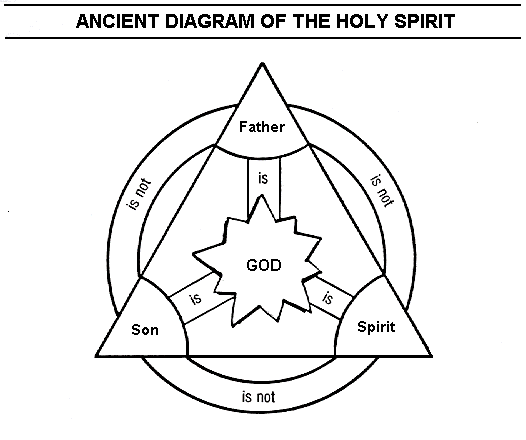
I have and am convinced of the three in one of the Godhead
This introduction is slightly larger than the main body text to help catch the reader's attention.
Introduction
Only a Saviour truly man could die for mankind...
Only a Saviour truly Deity could pay for mankind's sin
To accomplish the task given by the Father, the Son would need
Eternality (John 8:58; 17:5; Isa. 9:6; Mic. 5:2)
Omnipresence (Matt. 18:20; 28:20; John 3:13; 1:50)
Omniscience (Matt. 16:21; Luke 6:8; John 2:24, 25; 6:64; 21:17)
Omnipotence (Matt. 28:18; Mark 5:11–15; Phil. 3:21)
Immutability (Heb. 1:10–12; 13:8)
All attributes of DEITY belong to Christ (Col. 2:9)
Finish the introduction with a personal message to the reader. Speaking directly to your audience helps to show that the book was tailored for their individual needs.
RBBD
Robert Byron Bruce Diebel
A search of scripture reveals a myriad of support for the Deity of The Saviour. As the Bereans of long ago "search the scriptures to see if these things are so"
I have and am convinced of the three in one of the Godhead
C. S. Lewis
- CHAPTER 1 -
He Is Lord
What is required?
Company name
III. Evidence of Jesus’ Deity
A. Demonstration of omnipotence.
1. When Jesus stilled the storm with a word (Matt. 8:26–27).
2. When Jesus multiplied the loaves and fish (Matt. 14:19).
3. When Jesus changed the water into wine (John 2:1–11).
a. It is true that the above demonstrated the power of the Holy Spirit and Jesus’ faith.
b. However, John says by turning the water into wine he revealed his ‘glory’ (John 2:11).
B. His eternity
1. ‘Before Abraham was born, I am’ (John 8:58).
2. ‘I am the Alpha and the Omega’ (Rev. 22:13).
C. His omniscience
1. Knowing people’s thoughts (Mark 2:8).
2. Seeing Nathaniel under the fig tree from far away (John 1:48).
3. Knowing who would betray him (John 6:64).
4. The disciples said to him, ‘Now we can see that you know all things’ (John 16:30. Cf. John 21:17).
D. His sovereignty
1. He could forgive sins (Mark 2:5–7).
2. The Old Testament prophets would say, ‘Thus saith the Lord,’ but Jesus said, ‘But I say unto you’ (Matt. 5:22, 28, 32, 34, 39, 44).
3. He had the authority to reveal the Father to whomsoever he chose (Matt. 11:25–27).
E. His immortality (cf. 1 Tim. 6:16): only God has immortality.
Company name
1. ‘Jesus answered them, “Destroy this temple, and I will raise it again in three days” ’ (John 2:19).
2. ‘The reason my Father loves me is that I lay down my life—only to take it up again. No one takes it from me, but I lay it down of my own accord. I have authority to lay it down and authority to take it up again. This command I received from my Father’ (John 10:17–18).
3. He has the power of an ‘indestructible life’ (Heb. 7:16).
F. Worship of Jesus commended and commanded.
1. The Magi came to worship him (Matt. 2:11; cf. Matt. 8:2).
2. The angels were told to worship him (Heb. 1:6).
3. ‘Therefore God exalted him to the highest place and gave him the name that is above every name, that at the name of Jesus every knee should bow, in heaven and on earth and under the earth, and every tongue confess that Jesus Christ is Lord, to the glory of God the Father’ (Phil. 2:9–11. Cf. Rev. 5:12–13).
G. Why are the words, ‘Jesus is God,’ not to be found?
1. ‘God’ is a technical word for the Father.
2. Had the New Testament said, ‘Jesus is God,’ it would imply that Jesus is the Father, which would be an anti-Trinitarian heresy.
3. It would imply that ‘God is Jesus,’ which is a somewhat misleading statement.
4. The facts of the matter are:
a. The New Testament uses the word ‘God’ for the Father.
b. ‘Lord’ equally implies deity, and it is ‘Lord’ which is the technical word for the Lord Jesus Christ.
c. Paul confirmed this: ‘Therefore God exalted him to the highest place and gave him the name that is above every name, that at the name of Jesus every knee should bow, in heaven and on earth and under the earth, and every tongue confess that Jesus Christ is Lord, to the glory of God the Father’ (Phil. 2:9–11).[1]
Company name
[1] Kendall, R. T. (2001). Understanding Theology, Volume Three (pp. 25–34). Ross-shire, Great Britain: Christian Focus.
E. In Christ all the fullness of DEITY lives in bodily form (v. 9)
Jesus Christ was God in a body. This passage describes both Christ’s DEITY and his humanity. The God-Man was both fully divine and fully human. DEITY (theotes) is used to refer to the essence of God as opposed to the attributes (theiotes as in Rom. 1:20) of God. Christ possesses the fullness of the essence of God.
The evidence for the DEITY of Christ has been affirmed throughout the history of Christianity. Christ has the attributes of DEITY, performs the actions of DEITY, is given the titles of DEITY, and claims DEITY of himself. In addition the apostles also claim DEITY for Jesus as well.
Christ Possesses the Attributes of DEITY
1. Eternity (John 8:58; 17:5; Isa. 9:6; Mic. 5:2)
2. Omnipresence (Matt. 18:20; 28:20; John 3:13; 1:50)
3. Omniscience (Matt. 16:21; Luke 6:8; John 2:24, 25; 6:64; 21:17)
4. Omnipotence (Matt. 28:18; Mark 5:11–15; Phil. 3:21)
5. Immutability (Heb. 1:10–12; 13:8)
6. All attributes of DEITY belong to Christ (Col. 2:9)
Christ Performs the Work of DEITY
1. Creation (John 1:3, 10; Col. 1:16; Heb. 1:2)
2. Preservation (Col. 1:17; Heb. 1:3)
3. Forgiveness of sins (Mark 2:1–12; Luke 5:24; Col. 3:13)
4. Power to raise the dead (John 5:21; 11:43)
5. Judgment of the world (John 5:22, 27; 2 Cor. 5:10)
Christ Accepted the Worship Due DEITY
1. John 5:23
Company name
2. Luke 24:52
Christ is Given the Titles of DEITY
1. Son of God (Matt. 26:63–64; Mark 1:1; John 10:36)
2. Son of man (Dan. 7:13; Mark 2:10)
3. YHWH (Luke 1:76 [compare Mal. 3:1]; Rom. 10:13 [compare Joel 2:32])
4. God (John 1:1, 18; 20:28; Heb. 1:8)
Jesus Claimed to Be God
1. By claiming to be YHWH (Luke 1:76)
2. By accepting worship (Matt. 28; John 9)
3. By identifying himself with God in context of monotheism (John 10:30; 17:5).
4. By explicit claims (John 8:58)
5. By claiming to do what only God can do (John 5:19–27; Matt. 12:5–8)
6. By accepting the titles of DEITY (John 20:28; Matt. 16:16)
The Apostles Claim that Jesus Is God
Apostolic assertions for Christ’s DEITY can be found in John 1:1; Colossians 1:19; 2:9; Hebrews 1:8, and Titus 2:13. (The grammar of this verse demands an interpretation which combines God and Savior as a reference to Christ by virtue of Granville Sharp’s Rule. The rule states that in an article, “noun, kai, noun construction” the two nouns have the same referent.)
Messianic Proof of Christ’s DEITY
1. The Old Testament says “Messiah is God.”
Isaiah 7:14: Immanuel
Isaiah 9:6: Mighty God
Isaiah 40:10: LORD God
Daniel 7:13–28: Ancient of Days
Micah 5:2: From Everlasting
Company name
Zechariah 12:10: YHWH
Zechariah 14:16: Lord of Hosts (or Lord Almighty)
Psalm 45:6: God (Heb. 1:8)
Psalm 110:1: Lord—(Matt. 22)
Psalm 118:22: Stone (used 4 times in New Testament)
2. Jesus is Messiah (Hebrew basis for Greek christos or Christ)
Matthew 16:16–17, 20
Mark 8:29
Luke 9:20
Jesus alone fulfills all the prophecies.
3. Therefore Jesus is God.
Having set forth the biblical teaching that Christ is both human and DEITY, the next theological task is to set forth the relationship between these two natures in Christ. This is commonly referred to as the Hypostatic Union. In discussing this topic, the student of Scripture may describe the union but have limited understanding of the details of that union.
The orthodox statement of the Hypostatic Union, first set forth by the Council of Chalcedon in a.d. 451 (a meeting of early Christian leaders to clarify scriptural truth), says:
Company name
In agreement, therefore, with the holy fathers, we all unanimously teach harmoniously that we should confess that our Lord Jesus Christ is one and the same Son, the same perfect in Godhead and the same perfect in manhood, truly God and truly man, the same of a rational soul and body, consubstantial with the Father in Godhead, and the same consubstantial with us in manhood, like us in all things except sin; begotten from the Father before the ages as regards His Godhead, in the last days, the same, because of us and because of our salvation begotten from the Virgin Mary, the Theotokos, as regards his manhood; one and the same Christ, Son, Lord, only-begotten, made known in two natures without confusion, without change, without division, without separation, the difference of the natures being by no means removed because of the union, but the property of each nature being preserved, and coalescing in one person (prosopon) and one hypostasis (hupostasis)—not parted or divided into two persons (prosopa), but one and the same Son, only begotten, divine Word, the Lord Jesus Christ, as the prophets of old and Jesus Christ himself have taught us about him, and the creed of our Fathers has handed down (J. N. D. Kelly, Early Christian Doctrines, rev. ed. San Francisco: Harper & Row, Publishers, 1978, 339–40).
This excellent treatment is true to Scripture in affirming, without minimizing, the DEITY and humanity of Christ. This statement grew out of a debate in response to a number of various approaches to the two natures. During the debate, the church seemed to be much more suited to identifying the wrong teaching without making a positive statement of the right teaching. Chalcedon is the final positive statement of the orthodox position, although it is somewhat negative in tone telling us more about what the union is not, than what it is.
In keeping with the practice of the church throughout history, the following discussion will identify the unorthodox views of the Hypostatic Union in order to focus more properly on the orthodox view.
Only six variations of the unorthodox position have been conceived; other offerings are merely variations of those six, which appeared in the first five centuries. The errors fall into three groups of two each:

The answers are there!