Part Three: Assessment Tools
In part one of the Assessment in Invasion Games eBook we looked at how team sports make up a large part of most physical education programs worldwide, yet the assessment of student learning in these games in inauthentic and is often largely based upon assumptions. Part Two of the series explored how planning the activities in which your students will participate and choosing the right assessment tools is vital to ensure you have authentic assessment of student performance and understanding.
In part two I mentioned how I wanted to know if my students knew what they should do (with and without the ball) in an invasion game, as well as if they could execute the skills necessary to be successful. Essentially I wanted to be able to assess their decision making ability as well as their skill execution. When consulting research I found two assessment tools that have been used widely to assess these two areas. One was the Game Performance Assessment Instrument (GPAI) and the other was the Team Sports Assessment Procedure (TSAP).
Choosing the Right Tool for the Job
Both the GPAI and the TSAP were designed to measure game performance behaviours that demonstrate tactical understanding, as well as the player's ability to solve these tactical problems by selecting and applying appropriate skills. They both seemed like fantastic options, but which one should I use?
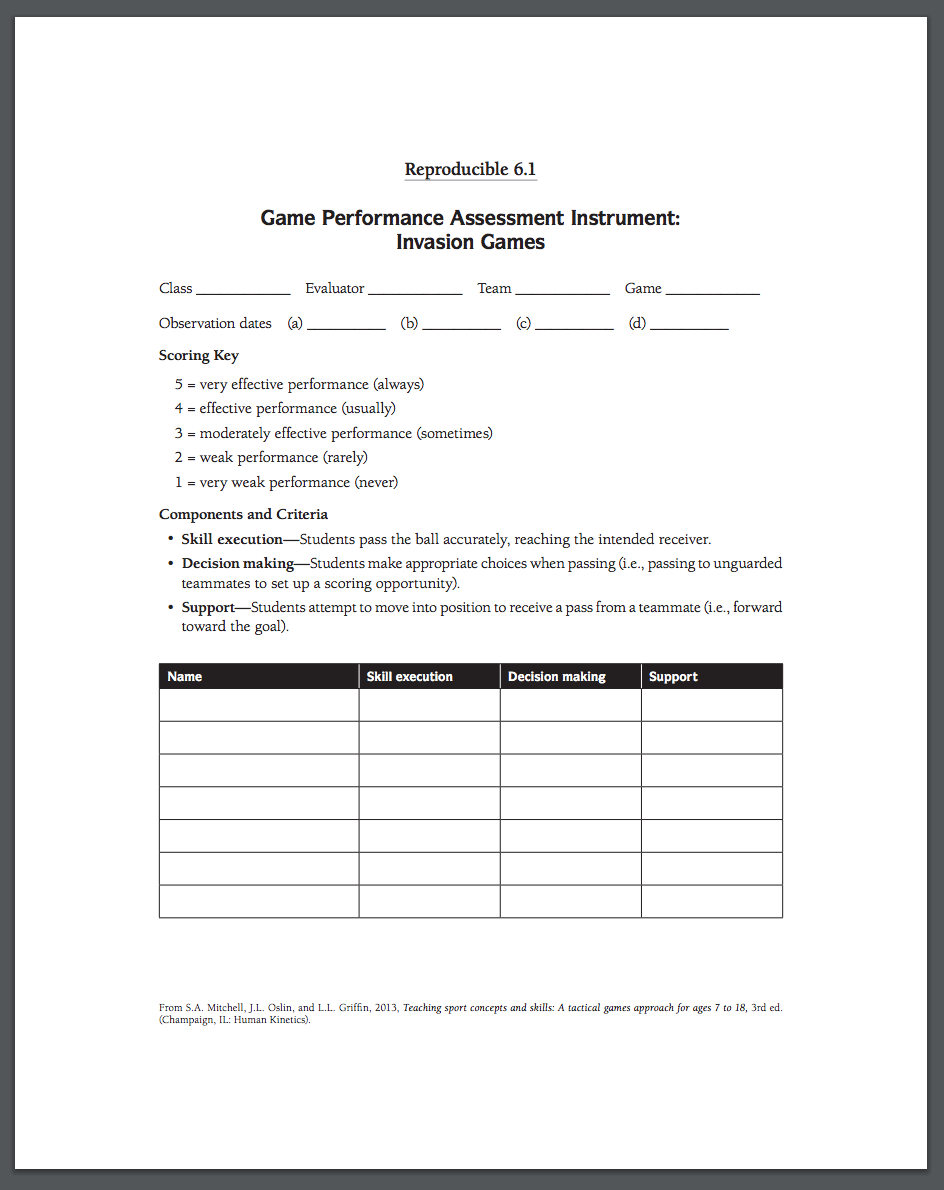
GAME PERFORMANCE ASSESSMENT INSTRUMENT
The GPAI is constructed through seven identifiable game components for measurement and codification. The identified game components include both "on the ball" and "off the ball" game performance.
1. Base
2. Decision Making
3. Skill Execution
4. Support
5. Guard/Mark
6. Cover
7. Adjust
TEAM SPORT ASSESSMENT PROCEDURE
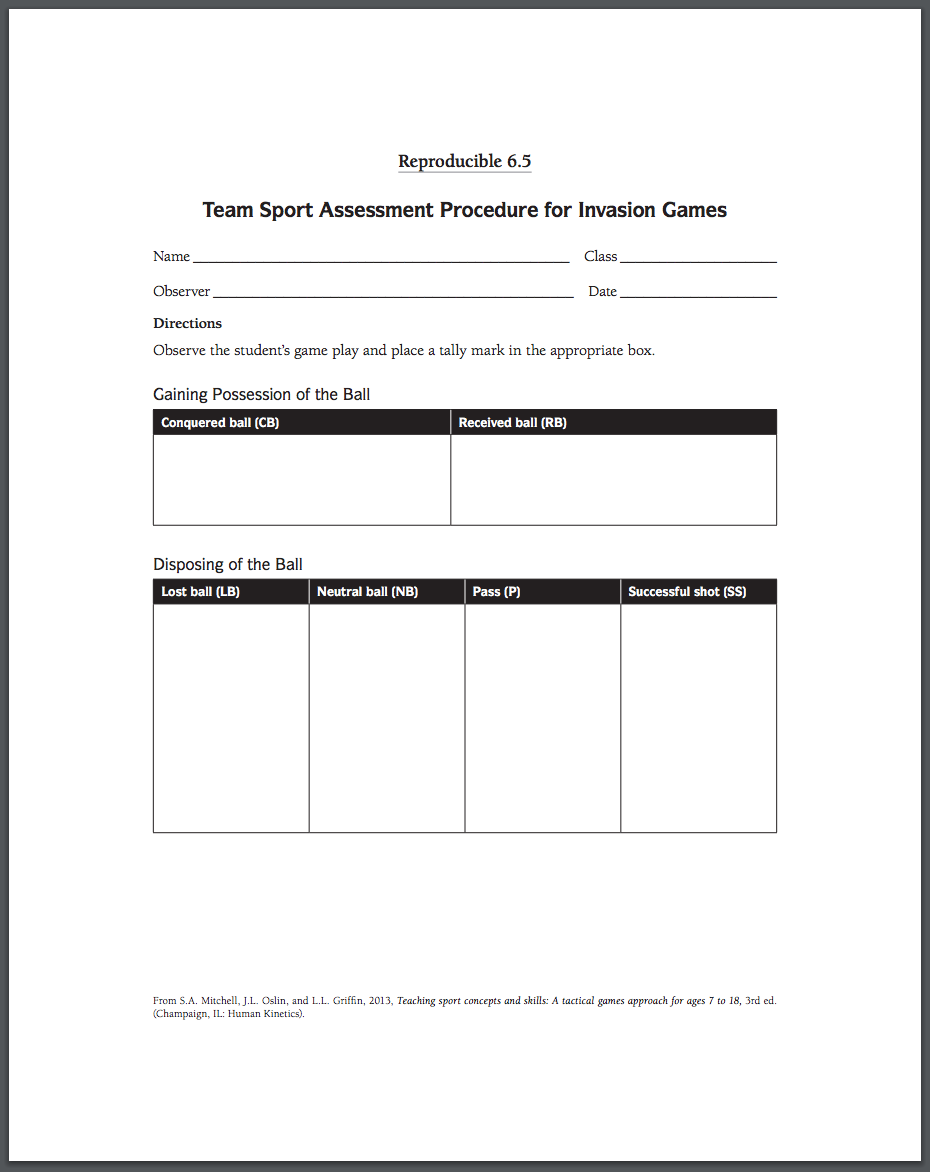
The Team Sports Assessment Procedure (TSAP) was developed for summative and formative assessment of game play through the direct involvement of students in the collection of assessment evidence as part of the leaning process. It is based on two features of game performance:
1. How a player gains possession of the object - conquered or received.
2. How a player disposes possession of the object - lost ball, neutral ball, pass or successful shot
Although both tools would have been very beneficial forms of assessment, I decided not to use these templates on this occasion and created my own assessment tool. But why?
Assessment Focus
While the versions of the GPAI and TSAP above would have provided me as the teacher with valuable data and information on the students decision making and skill execution, I wanted to create an more visual assessment tool which would enable my elementary school students to peer assess each other. One of the main tactical problems that I had noticed when observing my students playing our generic invasion game was the ability of the students to differentiate between passing to a team mate who was "open" and a teammate from was "closed" or marked. When designing my assessment tool I wanted to know if my students could choose the right pass to make? Going further, could the students execute the necessary skill to make the pass?
Passing & Catching Peer Assessment
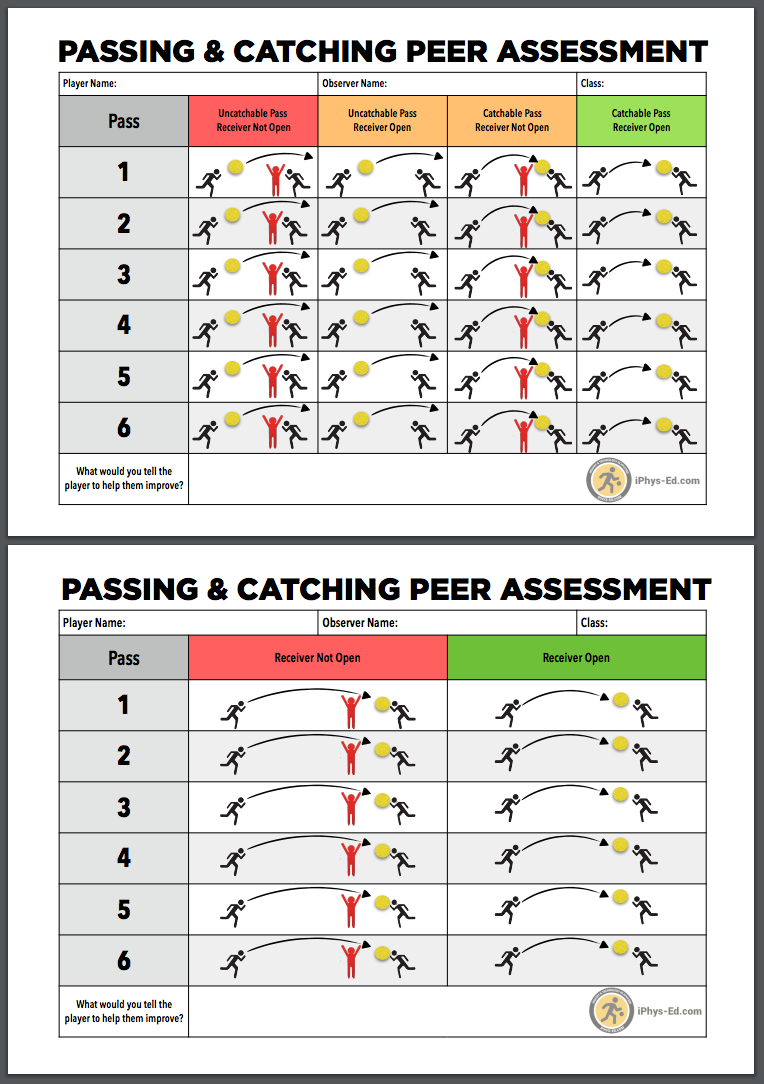
Below you will find two versions of the passing and catching peer assessment that I used with my students (which you can download for free). Initially I started with first version. This version of the assessment tool asked the assessor to look for four distinct observable actions within the game:
- Uncatchable Pass, Receiver Not Open
- Uncatchable Pass, Receiver Open
- Catchable Pass, Receiver Not Open
- Catchable Pass, Receiver Open
The second version of the tool brought the focus of the assessment solely onto the decision making aspect of play. Students were observing two distinct actions within the game:
- Receiver Not Open
- Receiver Open
Every time they saw the player they were observing make a pass they were to circle if the receiver was Open or Not Open. By simplifying the assessment tool to only two options it helped me to narrow the focus of the assessment and enabled the students who were peer assessing to be far more successful in their ability to identify if the student they were observing was making passes to open players or closed players.
The Next Step: Time to Assess
Now that I had decided on an assessment tool to use with my students, it was time run the assessment with my classes. In part four of the Assessment in Invasion Games eBook I will explore how I implemented this assessment tool in my classes and give suggestions and ideas on how best to organise your class to maximise the effectiveness of assessment.